
There’s something magical about spotting your first Lilac-breasted Roller or hearing the distinctive call of a Fish Eagle echoing across the bushveld. But here’s the thing about birdwatching – you don’t need to spend a fortune to get started. The beauty of birding lies in its simplicity and accessibility. What you need for birdwatching is surprisingly minimal, yet each piece of equipment serves a crucial purpose in enhancing your outdoor experience. Whether you’re planning a weekend escape to the Limpopo bushveld or embarking on your first birding adventure, having the right gear can make the difference between a frustrating outing and an unforgettable encounter with nature’s feathered wonders.
Bird Spotting Binoculars
Bird spotting binoculars are your most important investment, but you don’t need the most expensive pair. A decent set of 8×42 binoculars will serve you well – the first number is magnification, and the second is lens diameter for light gathering. Choose binoculars that feel comfortable around your neck for extended wear. Waterproof models are worth the investment in unpredictable bushveld weather. Test them in-store by looking at detailed objects across the room – sharp, bright images indicate quality optics.
Bird Field Guide
A good bird field guide is like having an expert birder in your back pocket. Choose one specific to your region – a Southern African bird guide will be far more useful in Limpopo than a general world guide. Look for guides with clear illustrations rather than photographs, as drawings often highlight the key identifying features better. The best guides include range maps showing where each species is likely to be found, seasonal information, and descriptions of calls and behaviour. Many modern birders swear by smartphone apps that include bird calls and photos, but there’s something satisfying about flipping through a physical book. Plus, books don’t run out of battery when you’re deep in the bush.
Birding Journal
Keeping a birding journal might seem old-fashioned in our digital age, but it’s one of the most rewarding aspects of birdwatching. Your journal becomes a personal record of your birding journey – where you’ve been, what you’ve seen, and how your skills have developed. Note the date, location, weather conditions, and species observed. Include sketches if you’re artistically inclined, or simply jot down distinctive features that caught your eye. Over time, you’ll start to notice patterns – which birds appear at certain times of year, how weather affects bird activity, and which locations consistently deliver great sightings. It’s also incredibly satisfying to look back and remember that first sighting of a rare species.
Bird Watching Camera With a Zoom Lens
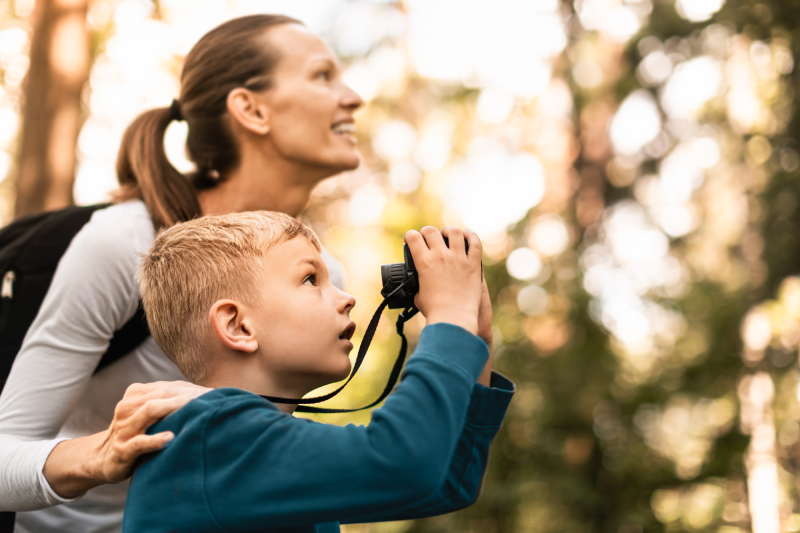
While not essential, a bird watching camera with a good zoom lens can add another dimension to your birding experience. You don’t need professional-grade equipment – many modern compact cameras offer impressive zoom capabilities. Look for cameras with at least 20x optical zoom, image stabilisation to reduce camera shake, and fast autofocus for capturing those fleeting moments. Remember, the goal isn’t necessarily to become a wildlife photographer overnight but rather to capture memories and help with the identification of tricky species. Sometimes a photo can reveal details that you missed in the field, helping you confirm an identification later.
The wonderful thing about what you need for bird watching is that you can start with just binoculars and a field guide, then gradually build your kit as your interest grows. At Mbizi Game Lodge & Spa, our diverse bushveld habitat provides the perfect setting to put your new birding skills to the test. With over 300 species recorded in the area, you’ll have plenty of opportunities to practise with your equipment. Contact us to plan your birding adventure, and don’t forget to explore our comfortable lodge facilities for a perfect base between birding excursions.